Microplastics Are a Climate Issue – and Politics Is Lagging Behind

Anna Brateanu
January 14, 2026
Anna Brateanu is a recent graduate of the London School of Economics and an aspiring policy analyst with interests in human rights, authoritarianism, and restorative justice. She previously worked in civil litigation and is interested in bridging the gap between academic research and public advocacy.
In short
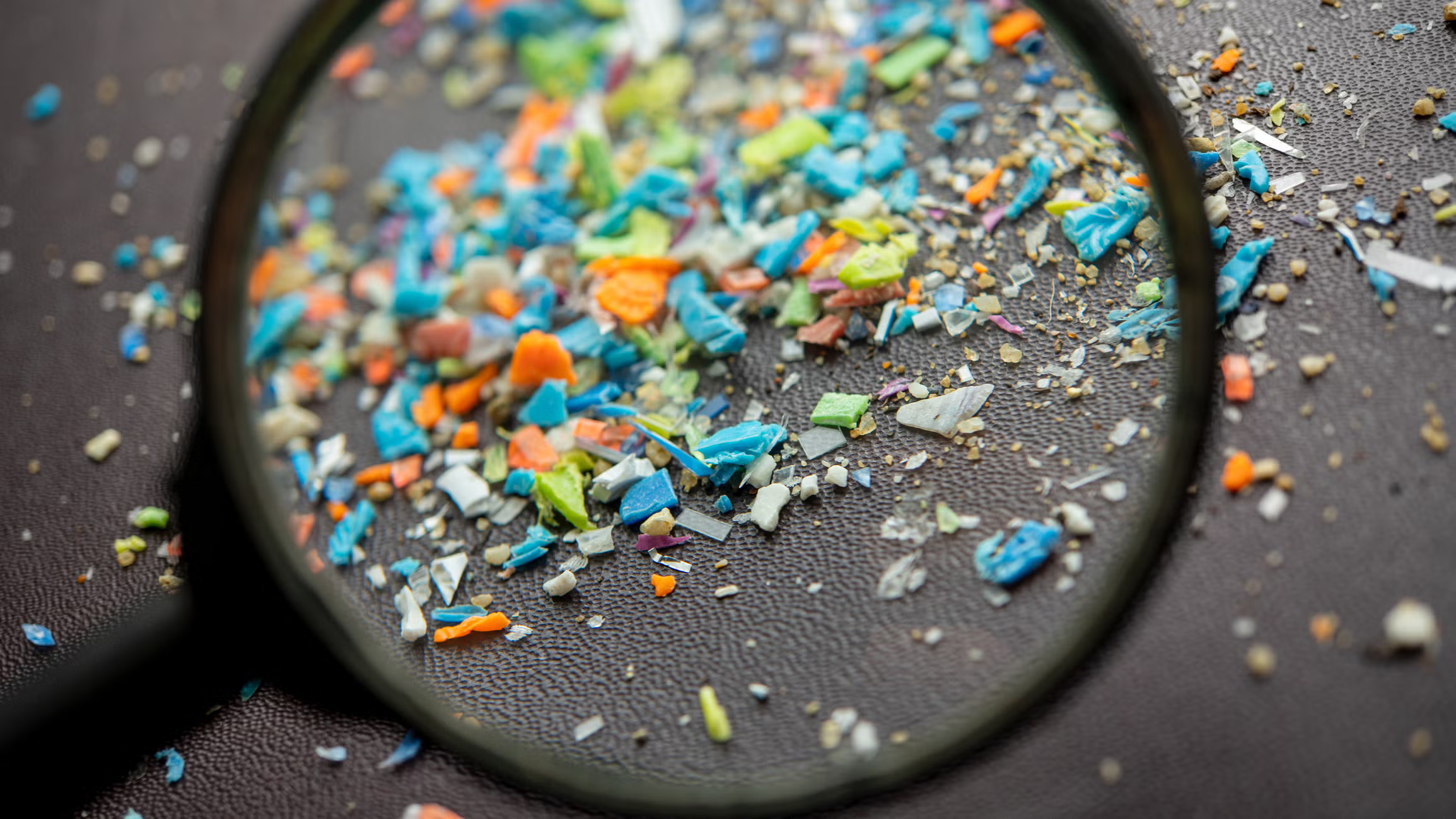
Microplastics, tiny plastic particles less than five millimeters in length, are an increasingly pervasive but underexamined driver of climate and environmental harm.
Microplastics Are a Climate Issue – and Politics Is Lagging Behind
Microplastics, tiny plastic particles less than five millimeters in length, are an increasingly pervasive but underexamined driver of climate and environmental harm. They originate both from plastics intentionally manufactured at microscopic scales, such as the microbeads once used in cosmetics, and from the gradual breakdown of larger plastic products under sunlight, heat, and mechanical stress. Today, these particles are virtually everywhere: in oceans, soil, air, drinking water, agricultural fields, Arctic ice, and even human blood.
Research increasingly links microplastic exposure to serious health risks, including hormonal disruption, cardiovascular disease, stroke, and neurodegenerative conditions, drawing growing political and scientific attention. Beyond these public health risks, however, emerging evidence suggests microplastics are intertwined with climate processes, accelerating warming and undermining ecosystems in ways that current political responses largely fail to address. Despite their ubiquity and potential consequences, regulatory and policy frameworks remain fragmented and insufficient, leaving both human and environmental health at risk.
Microplastics and Climate Interactions: Mounting Evidence
Scientific research on the relationship between microplastics and climate change is still developing, but a growing body of literature shows that microplastics interact with climate systems in complex and mutually reinforcing ways. A July 2025 meta-analysis found that microplastics have a significant, positive impact on global warming, exacerbating and accelerating climate change.
One of the clearest pathways by which microplastics exacerbate climate change is through soil pollution. Studies indicate that microplastics in soil significantly increase carbon dioxide emissions while simultaneously reducing soil fertility and water retention. Healthy soil acts as a carbon sink; microplastics undermine this function, turning soil from a climate mitigator into an emissions source.
In aquatic environments, microplastics disrupt the ocean’s natural capacity to regulate climate. Oceans absorb roughly a quarter of global CO₂ emissions, but microplastic pollution interferes with marine ecosystems and biogeochemical processes that enable this absorption. Microplastics also circulate throughout the water column, from surface waters to deep-sea sediments, destabilizing systems that are critical to climate regulation.
Microplastics have also been found in polar ice, where they increase heat absorption and accelerate melting. As ice caps melt faster, global temperatures rise, further exacerbating plastic degradation and microplastic proliferation. The result is a self-reinforcing feedback loop in which climate change and microplastic pollution amplify one another.
A Wanting Political Response
Political action on microplastics has lagged despite growing scientific consensus that microplastics pose a serious environmental and health threat. Globally, the European Union has emerged as the frontrunner on microplastic regulation, proposing stringent controls on plastic pellets, one of the largest sources of microplastic pollution, aiming to reduce microplastic pollution by up to 30% by 2030. While neither the EU nor the U.S. fully understands the long-term effects of microplastics, the EU’s precautionary approach stands in stark contrast to U.S. regulatory inertia.
The most notable success in the United States came over a decade ago when Illinois became the first U.S. state to ban microplastics in beauty products in 2014, a move that paved the way for the federal Microbead-Free Waters Act of 2015. This law prohibited the manufacture and distribution of cosmetic products containing plastic microbeads, marking an important, if narrow, victory. More recently, in December 2025, seven U.S. governors urged the Environmental Protection Agency to establish nationwide monitoring protocols for microplastics in drinking water. While this proposal would significantly improve public understanding and exposure tracking, it remains only a request, not a binding policy.
Mitigating Microplastics: Policy and Consumer Strategies
Addressing microplastics as a climate issue requires comprehensive, integrated policies that target both the sources and the downstream impacts of pollution. Effective strategies combine prevention and mitigation, recognizing that microplastic emissions occur at every stage of a product’s lifecycle, from design and production to use and disposal.
Upstream interventions are critical: Policies should limit plastic production, promote the use of less-toxic materials, and incentivize eco-design and best available technologies for textiles, tyres, and plastic pellets, which are among the highest sources of microplastics. Economic instruments, such as taxes, subsidies, and green public procurement criteria, alongside certification and labelling schemes, can encourage manufacturers and consumers to adopt lower-emission practices.
Microplastics should also be explicitly incorporated into climate policy, given evidence that they accelerate warming processes, undermine soil carbon storage, and disrupt oceanic carbon cycling. By linking microplastic regulation to carbon reduction targets, policymakers can ensure mitigation efforts address environmental, climatic, and public health risks simultaneously.
While policy and regulation are critical, consumers can also help mitigate microplastic pollution through everyday choices. Simple actions—such as reducing or avoiding single-use plastics, choosing natural fibers over synthetic textiles, washing clothes less frequently, and opting for natural materials instead of plastic containers or canned goods can help limit the release of microplastics during product use. However, it is equally important to recognize that the brunt of exposure is beyond individual control, and the burden should not fall solely on consumers. While consumer behavior can complement broader policy efforts, robust government action is essential to meaningfully reduce microplastic pollution. By combining informed consumer practices with strong policy interventions, society can tackle microplastic pollution while simultaneously addressing its climate and public health consequences.
Image credits: Harvard University
Explore More
Take Climate Action
Simple, practical ways to reduce your carbon footprint, alone or with others.
10 Highest-Impact Climate Actions
The personal actions that make the biggest measurable difference, backed by science.

Join the Climate Action Movement
How individual actions add up to collective, global change.