Why You Are More Important Than Ever in International Climate Policymaking
Luca Colson
January 5, 2026
Luca obtained a BA in International Relations from Durham University, and will soon be graduating with an MA in International Relations from King's College London. He is currently a prospective PhD candidate in International Relations, seeking to research the conduct of multilateral diplomacy in the United Nations.
In short
Climate change represents an unprecedented challenge for humankind. Not only does it impact all of humanity, but addressing the climate crisis requires a fundamental reconstruction of dominant socioeconomic systems defined by extraction, exploitation and
Climate change represents an unprecedented challenge for humankind. Not only does it impact all of humanity, but addressing the climate crisis requires a fundamental reconstruction of dominant socioeconomic systems defined by extraction, exploitation, and consumption. It comes as little surprise that governments throughout the world have proven themselves reluctant to carry out such monumental shifts, instead prioritising fossil-fuel intensive economic growth. The annual Conferences of the Parties (COPs), under the leadership of the United Nations Framework Convention on Climate Change (UNFCCC), perfectly reflects this trend with negotiations often characterised by substantive and procedural conflicts between states. Whilst it seems intangible for ‘ordinary’ individuals to have a direct impact on what occurs within the halls of these global negotiations, existing climate change treaties have created an unprecedented opportunity for domestic, grassroots, action.
Established in 1992 at the Rio Earth Summit in Brazil, the UNFCCC became operational in 1994. As of today, 198 parties (197 states and the European Union) participate in its annual negotiations, known as COPs, with the core mission of curbing greenhouse gas emissions on a global scale.
1. An unprecedented step
The Kyoto Protocol, adopted at COP3 (1997), was the first of its kind, requiring that all developed nations reduce their emissions by 5.2% by 2008-2012 compared to 1990-levels. Individual emission reduction targets were negotiated and states were legally required to meet such targets. Only developed states, known as Annex I countries, were assigned legally-binding targets due to their historical responsibility for greenhouse gas emissions, whereas developing states (non-Annex I) were exempt from emission reduction targets to protect their right to development. Despite this initial achievement, the Kyoto Protocol soon faltered as the United States failed to ratify the treaty and eventually removed its signature, protesting the lack of targets for rapidly developing states such as China, India, and Brazil. The United States’ decision crippled the Kyoto Protocol’s potential impact as it no longer included the world's largest polluter.
2. A cold night in Copenhagen
COP15 (2009) in Copenhagen sought to adopt a successor agreement to the Kyoto Protocol. Its core objectives included bringing the United-States back in the UNFCCC process, setting new emission reduction targets for developed states, and considering targets for developing states for the first time. The Copenhagen Accord did not pass the first hurdle of adoption, as too many states objected to its components and the manner in which it was negotiated on COP15’s final night. Climate vulnerable nations, including Tuvalu and Sudan, criticised the Copenhagen Accord’s weak stance on emissions, omitting legally-binding targets for any party. Further, several states felt betrayed by the lack of transparency at COP15, with the Copenhagen Accord negotiated behind closed doors by a mere 25 delegations without a formal mandate. As a result, COP15 was famously nicknamed ‘nopenhagen’.
3. Redemption in Paris
COP21 (2015) in Paris once again attempted to negotiate and adopt a global treaty on climate change to replace the Kyoto Protocol, and was perceived by delegates as a final attempt to redeem the UNFCCC following the Copenhagen debacle. Not only was the Paris Agreement adopted via consensus, its contents served as a shift in the future of emission reduction targets. Whereas the Kyoto Protocol enforced legally-binding targets, the Paris Agreement required that all states, whether developed or developing, individually provide their own nationally determined contributions (NDCs), to be increased and resubmitted every 5 years. This new system increased the flexibility of the treaty compared to the Kyoto Protocol’s internationally negotiated targets, thereby encouraging both developed and developing states to submit ambitious NDCs. However, now that governments establish their own targets, how can they be held accountable by ‘ordinary’ citizens?
This transition from a top-down to a bottom-up system, allowing states to establish their own targets rather than imposing them internationally, has the potential to empower actors within nation-states, including individuals. Members of civil society now have a direct role to play in ensuring that governments not only meet their stated targets, but that targets reflect the highest potential ambition to adequately address climate change.
1. Thinking beyond the national government
First, individuals must consider actions beyond the national level. More specifically, other levels of government have become more prominent in climate policy. Indeed, since the early 2000s, the world’s major cities, including London, Paris, Los Angeles, Tokyo, and several more, have coordinated their climate policies to promote the effective implementation of ambitious initiatives. Efforts do not only occur within the world’s richest cities. Lancaster City Council in England has pledged to achieve net-zero emissions by 2030 and has begun implementing new walking and cycling networks to aid in the transition away from motorised vehicles. Dundee City Council in Scotland has also supported renewable energy projects, such as off-shore wind farms, whilst implementing dedicated training programmes to enable the workforce to accelerate the green transition. These are just a few examples to highlight that individuals can have an impact beyond the national level, and that political participation may bring forth positive changes at the local, regional, national, and eventually international levels.
2. Political participation
Political participation and activism are the principal sources of power individuals possess to encourage the adoption of climate-friendly policies at different levels of government. Political participation can be divided into two principal categories: direct and indirect action. Direct action includes using your right to vote in local, regional, and national elections. Scrutinising official party declarations for their proposed climate and environmental policies, and researching the track-records of parties and candidates could indicate the historical importance paid to climatic and environmental issues. Using the opportunity to contact your local representatives may also promote climate-friendly policies, holding them accountable to their climate promises, whilst increasing the pressure to improve existing initiatives.
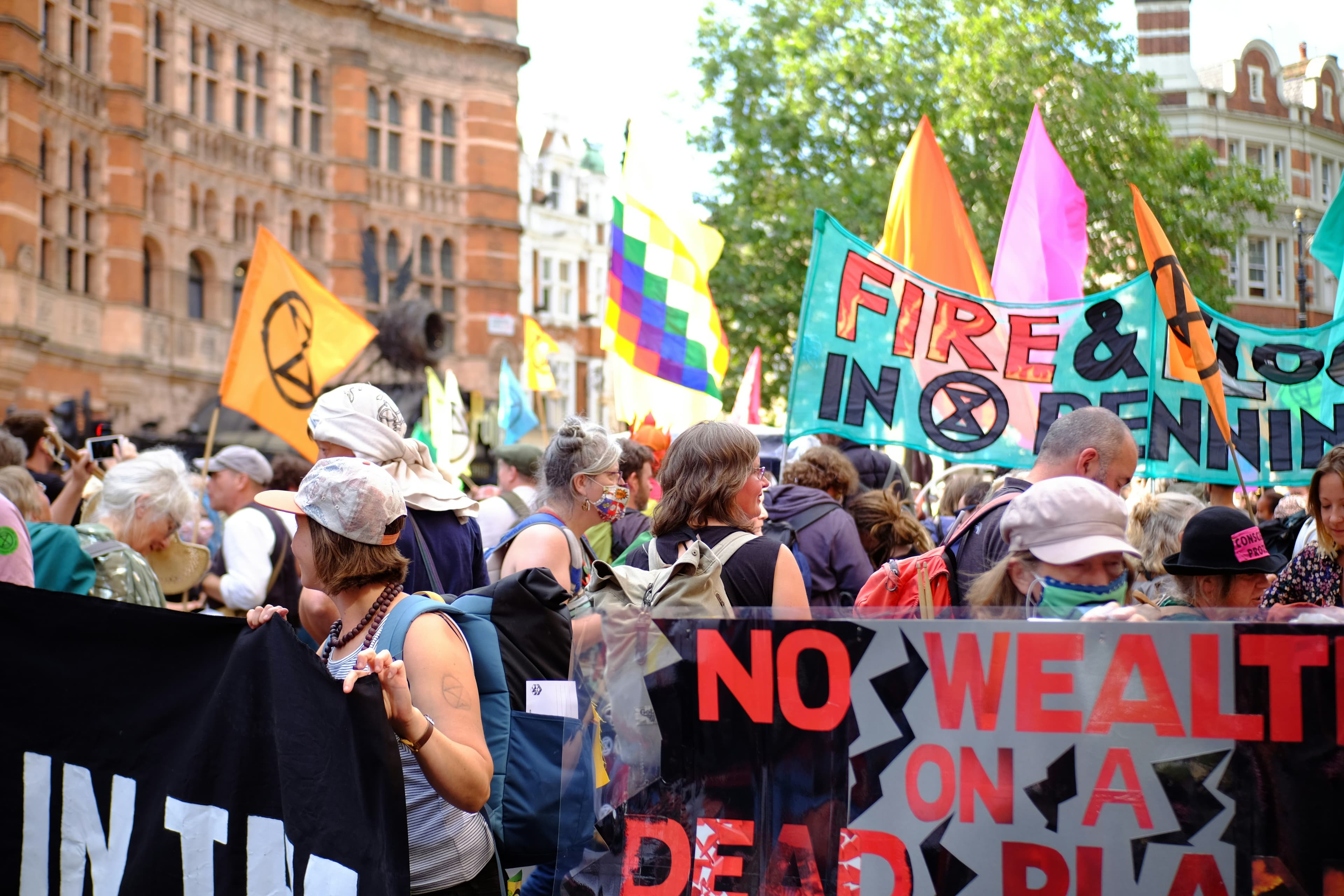
Indirect actions are geared towards pushing climate change and environmental issues to the forefront of public awareness and the political agenda. These are distinguished from direct actions as they operate via distinct organisations and civil society more broadly. First, participating in organised climate demonstrations displays mass public support and demands for decisive climate action, raising the stakes on governments. Second, involvement in climate organisations, such as non-governmental organisations (NGOs) and advocacy groups, produces similar effects, enabling greater influence on policymaking.
The UNFCCC and COP process has adopted a leading position in international climate policymaking, yet it has faltered in its attempts to adequately induce climate-friendly transitions in its member-states. It took 30 years for coal to be mentioned for the very first time in an adopted document at COP26 (2021) in Glasgow. However, the language used was invariably diluted. Instead of calling for the phasing out of coal, the Glasgow Climate Pact merely called for “efforts towards the phasedown of unabated coal power”, demonstrating modern society’s continued reliance on fossil fuels. Despite such set-backs, global energy think tank Ember found that renewable sources of energy overtook coal in global electricity generation in the first half of 2025, and the UNFCCC and COP process has opened the door for individuals around the world to collectively impact national climate policies. The Paris Agreement’s calls for NDCs have reinforced the importance of political participation in its diverse forms. Our political engagement is invaluable to holding governments accountable for stated targets, and to push them towards ever-greater heights.
Image Credit: Sean Robbins via Unsplash.
See also:
Explore More
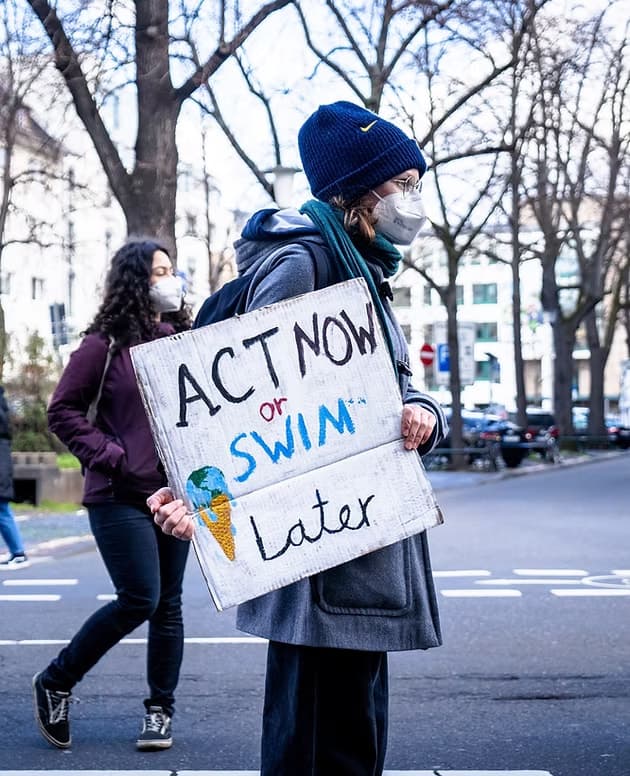
Take Climate Action
Simple, practical ways to reduce your carbon footprint, alone or with others.
10 Highest-Impact Climate Actions
The personal actions that make the biggest measurable difference, backed by science.

Join the Climate Action Movement
How individual actions add up to collective, global change.