Learn More About Carbon Offsetting: The Pros and Cons

In short
First cut emissions at source, then carbon offset the rest... is this the right strategy?
Learn More About Carbon Offsetting: The Pros and Cons
Book a flight, order a parcel or buy new trainers, and there's a good chance you'll be offered the chance to "offset" it. Tick a box, pay a few extra pounds, and your emissions are cancelled out. Or so the promise goes.
Carbon offsetting can do real good. It can also do real harm if we treat it as a shortcut. Here's what the evidence says, and how to use offsetting well.
What is carbon offsetting?
When you buy a carbon offset, you pay for a project somewhere else that claims to prevent or remove an amount of carbon equal to your own emissions. That might be protecting a forest, planting trees, handing out cleaner cookstoves, capturing industrial gases or funding renewable energy. In theory, your emissions are balanced out by someone else's reductions.
It's a big market. Across the ten largest carbon standards, 182 million tonnes' worth of credits were retired in 2024 alone [5].
Why the clock matters
To keep global warming within 1.5°C, the Intergovernmental Panel on Climate Change (IPCC) says global emissions need to fall by at least 43% by 2030 and 60% by 2035, compared with 2019 levels [1]. That means real, physical cuts to the carbon going into the atmosphere, this decade. Keep that in mind when you weigh up the pros and cons below.
The cons: why offsetting isn't the solution
It doesn't cut emissions at the source. This is the biggest problem. Offsetting pays for pollution after it happens instead of preventing it. The carbon from your flight still goes into the atmosphere. At best, an offset balances it out somewhere else, and only if the offset really works.
Many credits don't deliver what they promise. The research here is sobering:
- Fewer than 16% of credits were real. A 2024 study in Nature Communications looked at 2,346 projects covering about one billion tonnes of CO₂-equivalent. It found that fewer than 16% of the credits issued represented real emission reductions [2].
- Results varied widely by project type. Clean cookstove projects delivered reductions equal to only 11% of the credits they issued, and avoided-deforestation projects 25%. Wind energy projects would most likely have been built anyway, so their credits didn't add anything [2].
- Only 6% for forest protection projects. A 2023 study in Science examined 18 forest-protection projects in five countries and found that only 6% of their credits were linked to real, additional carbon reductions. Of 89 million credits expected from these projects in 2020, just 5.4 million represented genuine reductions [3].
- More than 90% "phantom credits". In January 2023, a nine-month investigation by The Guardian, Die Zeit and SourceMaterial found that more than 90% of the rainforest offset credits it examined from Verra, the world's leading carbon standard, were likely to be "phantom credits" that didn't represent genuine carbon reductions [4]. Verra disputed the findings.
Permanence is uncertain. A forest only locks away carbon for as long as it stands. California's forest offset programme keeps a reserve of spare credits, called a "buffer pool", to cover losses from fire and disease. That reserve was meant to last about 100 years. By late 2023, wildfires had already used up nearly a third of it in just ten years [6].
It can become a licence to pollute. When offsetting feels like it cancels out a flight, it's easier to justify the next one. Companies can do the same, putting "carbon neutral" labels on products while their actual emissions stay the same.
The pros: where offsetting still helps
Offsetting still has a place. Used honestly, as a second step after you've cut what you can, it does some things well.
It gets money into greener places. Good projects protect ecosystems, bring cleaner energy to communities that need it, and fund carbon-removal technologies that need investment to grow.
Some project types work much better than others. The same study that found widespread over-crediting found that projects destroying HFC-23, a powerful industrial greenhouse gas, delivered reductions equal to 68% of the credits they issued [2]. Quality varies a lot, which means your choice of project matters.
The market is starting to reward quality. In 2024, buyers paid 381% more for credits that remove carbon from the atmosphere than for credits that only claim to avoid emissions, up from 245% the year before [5]. More and more buyers want offsets that can be shown to work.
It deals with emissions you can't avoid yet. Some of your footprint can't be eliminated right now, whether that's a family visit abroad or a commute with no good public transport. For that part, a well-chosen offset is better than doing nothing.
Cutting at the source goes further
Compare what an offset might achieve with what everyday choices definitely achieve. According to researchers at Lund University and the University of British Columbia [7]:
- Living car-free saves about 2.4 tonnes of CO₂-equivalent a year.
- Skipping one return transatlantic flight saves about 1.6 tonnes.
- Eating a plant-based diet saves about 0.8 tonnes a year. That's four times more effective than recycling thoroughly, and eight times more than switching your lightbulbs.
These savings don't depend on how a project was certified or whether a forest survives the next fire season. The emissions never happen.
How to offset well
If you offset, the order matters: cut first, then offset what's left. When choosing a project, look for:
- Additionality: the project wouldn't have happened without offset funding.
- Permanence: there's a credible plan to keep the carbon locked away for the long term.
- Independent verification: check for strong standards and quality labels, such as the Integrity Council for the Voluntary Carbon Market's Core Carbon Principles [9].
- Transparency: you can see where the project is, what it does and how its impact is measured.
The Oxford Offsetting Principles, first published in 2020 and revised in 2024, give the same advice: cut emissions first, make sure the credits you use are genuine, and shift over time towards carbon removal with long-lasting storage [8].
What we're doing at The Climate App
At The Climate App, we believe in doing both, in the right order.
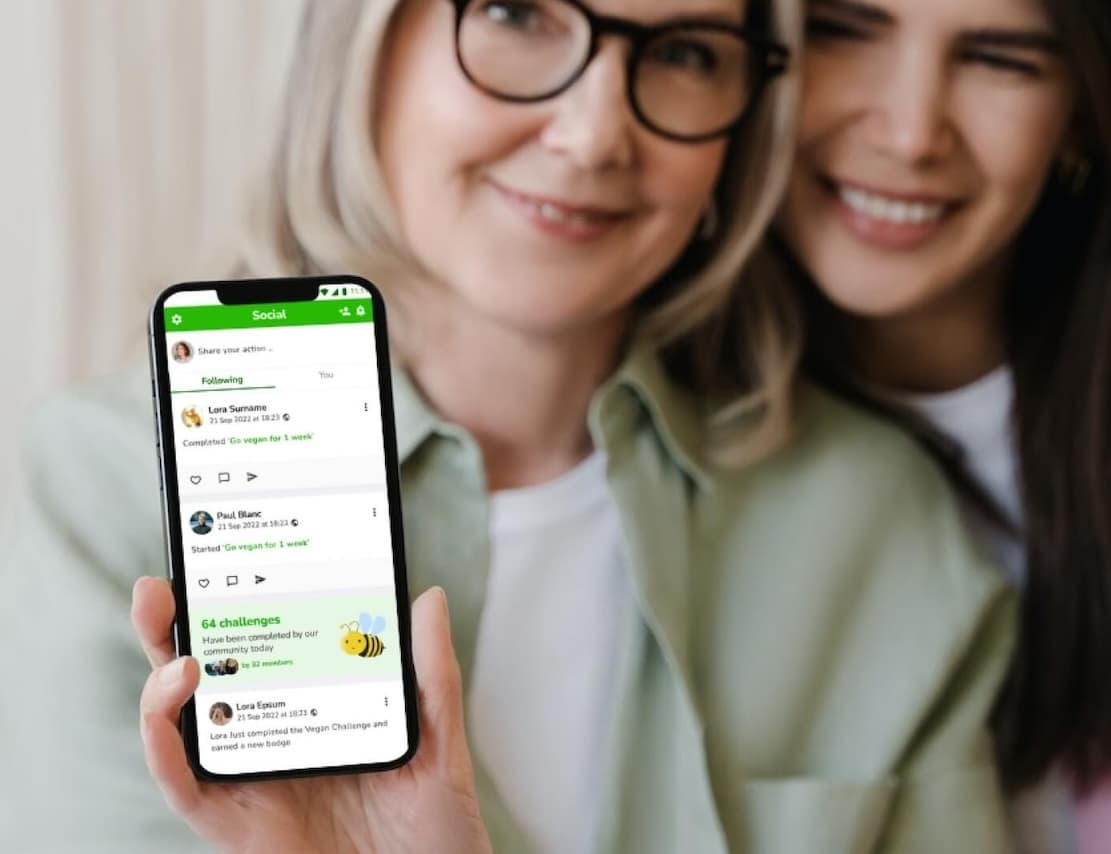
First, cut at the source. The app's bite-sized challenges help you build habits that reduce your emissions: eating more plant-based meals, travelling lower-carbon, using less energy at home and more. You can track your carbon footprint as it drops, earn points, and challenge friends to join you. Research shows that seeing people around you take action makes you more likely to do the same, so every challenge you complete can inspire others.
Then, offset what's left. For the emissions you can't avoid yet, you can subscribe in The Climate App to offset your carbon footprint every month. It's a simple way to take responsibility for your remaining footprint and get money into greener places while you keep working to shrink it.
Offsetting has its place, but lasting change starts with the choices we make each day. Download The Climate App, take your first challenge, and start cutting your footprint at the source.
Sources
- IPCC (2023). AR6 Synthesis Report, summarised by the World Economic Forum: The IPCC just published its summary of 5 years of reports. Full report: IPCC AR6 Synthesis Report, Summary for Policymakers
- Probst, B. et al. (2024). Systematic assessment of the achieved emission reductions of carbon crediting projects. Nature Communications. Summary: Max Planck Society
- West, T. et al. (2023). Action needed to make carbon offsets from forest conservation work for climate change mitigation. Science. Summary: University of Cambridge
- The Guardian, Die Zeit and SourceMaterial (18 January 2023), via Carbon Brief: Revealed: more than 90% of rainforest carbon offsets by biggest provider are worthless
- Ecosystem Marketplace (2025). SOVCM 2025 finds the voluntary carbon market in transition
- Wynes, S. & Nicholas, K. (2017). The climate mitigation gap: education and government recommendations miss the most effective individual actions. Environmental Research Letters
- University of Oxford, Smith School (2020, revised 2024). The Oxford Offsetting Principles
- Integrity Council for the Voluntary Carbon Market. icvcm.org
Explore More
Take Climate Action
Simple, practical ways to reduce your carbon footprint, alone or with others.
10 Highest-Impact Climate Actions
The personal actions that make the biggest measurable difference, backed by science.
Join the Climate Action Movement
How individual actions add up to collective, global change.